Leading workflow architecture for an AI-assisted grid platform
The product helps power-systems engineers configure simulations, analyze contingencies, investigate grid violations, plan mitigations, and compare scenarios inside an existing AI platform with its own technical and interaction constraints.
The source material at kickoff included workshop boards, technical notes, demo screenshots, transcripts, existing platform patterns, and AI-generated wireframes from the technical team. It was substantial but not coherent, a familiar enterprise condition. Different artifacts described different versions of the product, and several important relationships remained implicit.
The design question was not simply how to move quickly. It was how to move quickly without allowing speed to substitute for understanding.
My role extended well beyond screen execution. I synthesized workshop findings, technical documentation, stakeholder feedback, and engineering requirements into the operational mental model, information architecture, and interaction logic for the product.
I led collaborative working sessions with engineers, subject-matter experts, and stakeholders to define five connected domains: simulation configuration, contingency analysis, violation investigation, mitigation planning, and comparative scenario review. As requirements changed, I restructured the workflow so those domains remained distinct enough to understand and connected enough to operate as one system.
The work included patterns for AI-assisted recommendations, topology insights, filtering, mitigation planning, and scenario comparison. Regular walkthroughs and product reviews made the prototype a shared decision surface: specific enough to expose disagreement, flexible enough to change before disagreement became expensive.
Alongside the workflow-architecture work, I framed uncertain design questions as a sequence of bounded experiments. Each had a question, a source set, an output, and a validation step. AI helped translate unfamiliar concepts, compare artifacts, synthesize evidence, generate prototype candidates, and interpret completed screens. But it did not receive decision authority.
AI outputs were treated as hypotheses, not answers.
That distinction changed the work. A generated screen was not progress because it looked plausible. It became useful only after its assumptions were visible enough to evaluate.
One early AI-generated prototype imposed a linear progress model on the workflow. The screens looked credible: clear steps, familiar progress indicators, responsible enterprise posture. It looked like it had passed a committee. The problem was conceptual. The real work required users to revisit earlier decisions as results, fixes, and plan comparisons changed.
The prototype had translated uncertainty into a sequence it could render easily. It made the wrong mental model look finished.
That failure became the governing test for the project: every prototype needed to show not only what happened next, but what persisted, what could be revisited, where validation occurred, and which objects belonged to a violation versus a plan.
The resolved direction used a five-step surface for orientation while preserving persistent case state and the ability to revisit earlier decisions underneath it.
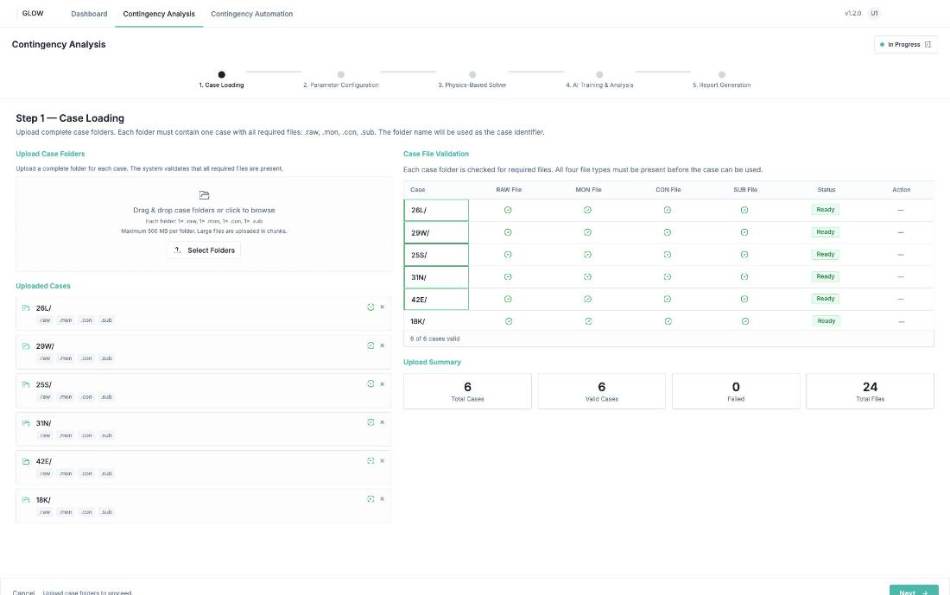
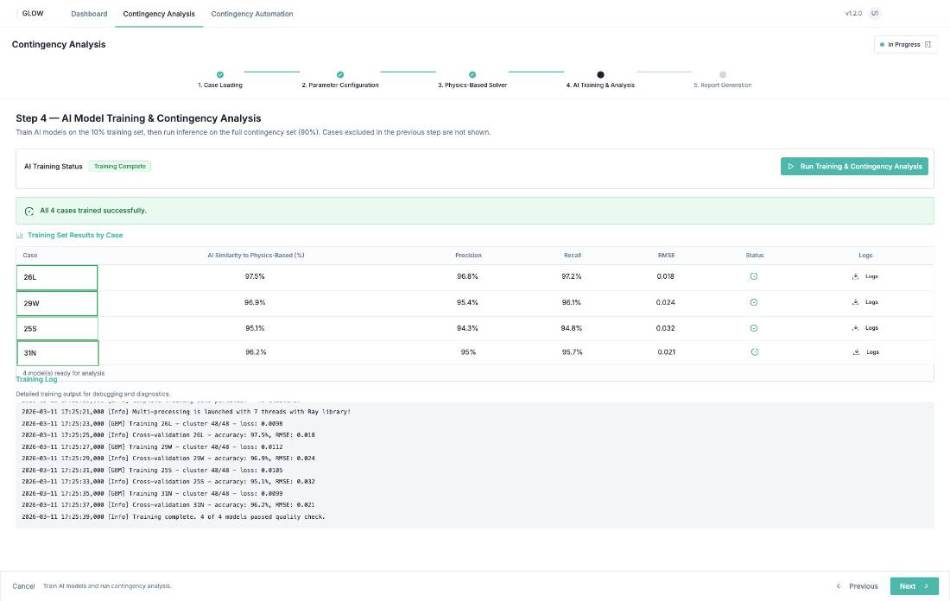
The work produced a clearer product model, scalable workflows, and explicit answers to questions that had remained abstract: where validation occurs, what persists across runs, when users revisit earlier decisions, and whether fixes belong to individual violations or to broader plans.
The final flows and high-fidelity prototypes established the product direction and gave engineering, domain experts, and stakeholders a concrete system to evaluate together. The engineering team responded strongly; one experience strategist summarized the work this way: “She does a great job turning very complex workflows into intuitive designs.”
The evaluation work also produced a reusable internal method for testing whether complex prototypes communicate their intended system before stakeholder review.
The durable outcome was not faster wireframing. It was a more disciplined relationship between generation and judgment.
AI was not the method. AI was the material being tested. The method was design judgment.
Speed is useful. Speed without judgment is faster nonsense.
Screens are sanitized recreations. Client data, naming, and internal terminology have been removed.